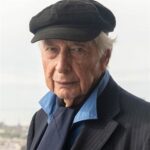


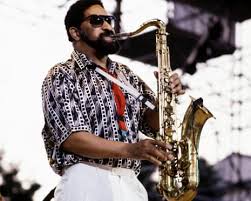
There are certain names in music that transcend the instrument they play. Sonny Rollins was one of those names. The legendary tenor saxophonist, a true giant of jazz, passed away on May 25, 2026, at his home in Woodstock, New York. He was 95 years old.
If you know jazz, you know the weight of that name. If you don’t, here is the short version: Sonny Rollins was the heaviest of the heavyweights. And now that he’s gone, it feels like the earth shifted slightly off its axis.
From Sugar Hill to Saxophone Colossus
Born and raised in the vibrant Sugar Hill section of Harlem, Rollins was a product of New York’s golden age of bebop. By the early 1950s, while most of us are figuring out how to parallel park, Rollins was in the studio with the architects of modern music: Charlie Parker, Miles Davis, and Thelonious Monk.
But he wasn’t just a sideman. Even before he became a star, he was writing the curriculum. His composition “Oleo” became an instant standard, covered by Davis, John Coltrane, and countless others. It’s the kind of song that young jazz students cut their teeth on today.
Then came 1956. If you have to pick a single moment when Rollins became Sonny Rollins, it was the release of Saxophone Colossus.
That album, his sixth, was a declaration of war against mediocrity. It didn’t just put him on the map; it gave jazz a new vocabulary. He introduced calypso rhythms into the fold and showcased a talent for melodic improvisation that felt less like playing and more like having a conversation with God. The Library of Congress agreed—they preserved it in the National Recording Registry.
A League of His Own
Rollins had a tone you could spot from a mile away. It was big, thick, and human. While other tenor players chased speed, Rollins chased meaning.
Musician Warren Haynes put it perfectly on Facebook: “Out of all the amazing tenor players I was hearing, Sonny hit me the hardest. He was in a league of his own – and everyone knew it. He was the heaviest of the heavy.”
That quote gives me chills. Every great tenor player that came after had to try not to sound like Sonny, because if you didn’t try, you would just become a clone.
He gave us masterpieces like Way Out West, Freedom Suite (a bold political statement in the late 50s), and The Bridge—his comeback album after a mysterious two-year hiatus during which he famously practiced on the Williamsburg Bridge in New York City.
The 9/11 Concert: A Testament to Resilience
Rollins was a warrior. Even in his 70s, he was winning Grammys. His 2000 album This is What I Do took home the gold.
But his most profound late-career moment came in 2001. His album *Without a Song: The 9/11 Concert* was recorded just four days after the terrorist attacks. At the time, Rollins lived a few blocks from the World Trade Center. He was forced to flee his home, carrying his horn with him.
Most people would have canceled. Sonny went to the studio. That recording of “Why Was I Born?” is haunting. You can hear the grief and the unbroken spirit of New York in every note. It won a Grammy, too.
The Final Bow
Sonny Rollins did not fade away. He stopped performing publicly in 2012 at 82, and officially retired from music in 2014. He earned his rest.
He leaves behind a shelf full of Grammys, a National Medal of Arts, a spot in Down Beat’s Hall of Fame, and something much rarer: the undying respect of every musician who ever heard him play.
Rest in power, Colossus. You made the world swing harder.
Did you ever see Sonny Rollins play? Maybe you discovered him during his “Bridge” period, or fell in love with his calypso jams later in life. Share your memories and favorite tracks in the comments below.