


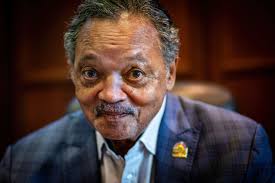
The world lost a towering figure in the fight for human dignity on February 17, 2026. Rev. Jesse Jackson, a man whose life’s work bridged the gap between the picket line and the political podium, passed away at the age of 84.
From the segregated streets of Greenville, South Carolina, to the halls of international diplomacy, Jackson’s journey was defined by a singular, restless drive: to make America—and the world—live up to its promise of equality.
From the “Greenville Eight” to the Global Stage
Jackson’s resolve was forged in the fire of the Jim Crow South. Forced to navigate a world of separate water fountains and back-of-the-bus seating, he chose activism over a promising baseball career. His early leadership was evident as student class president at Sterling High School and later during the 1960 sit-ins with the “Greenville Eight.”
While he fell just three classes short of a Master’s degree to join the front lines of the Civil Rights Movement, his education never stopped. He became an ordained minister in 1968, a calling that would infuse his political rhetoric with the moral weight of the pulpit.
The Lieutenant of the Movement
In 1965, Jackson joined Dr. Martin Luther King Jr. for the historic Selma to Montgomery marches. King recognized Jackson’s relentless energy, eventually appointing him to lead the Southern Christian Leadership Conference’s (SCLC) Operation Breadbasket. This initiative was a masterclass in economic activism, focusing on improving the financial conditions of Black Americans through corporate accountability.
Following the tragedy of King’s assassination, Jackson continued the mission by founding Operation PUSH (People United to Serve Humanity) and the Rainbow Coalition. These organizations weren’t just about protest; they were about power—specifically, the power of a “multicolored” coalition of the marginalized.
Breaking the Political Ceiling
Perhaps Jackson’s most daring feat was his pursuit of the American presidency. In 1984 and 1988, he launched campaigns that transformed the Democratic Party.
-
1984: He defied critics to finish third among contenders.
-
1988: He won seven primaries and four caucuses, proving that a Black candidate could command a broad, national following.
His 1988 “Keep Hope Alive” speech remains one of the most iconic moments in American political history. He famously argued that “if an issue is morally right, it will eventually be political,” a mantra that pushed the party toward more progressive stances on voting rights and poverty alleviation.
A Legacy of Global Impact
Jackson’s work extended far beyond U.S. borders. He served as a special envoy to Africa, brokering peace and promoting democracy. His activism also touched on:
-
Economic Justice: Founding the Wall Street Project in 1996 to diversify corporate boardrooms.
-
International Human Rights: Challenging the Bitburg controversy in 1989 and advocating for peace in conflict zones.
Honors and Accolades
The impact of his 84 years was recognized by world leaders across the spectrum.
-
2000: Awarded the Presidential Medal of Freedom by Bill Clinton.
-
2021: Appointed Commander of the Legion of Honor by French President Emmanuel Macron.
-
1979: Recipient of the Jefferson Award for Greatest Public Service Benefiting the Disadvantaged.
Keep Hope Alive
Jesse Jackson taught a generation that progress is not a gift, but a result of persistent “pushing.” He transitioned from a student organizer to a global statesman without ever losing his “street heat.” As we reflect on his passing, his life serves as a blueprint for how to turn moral conviction into political reality.
The march continues, but today, we pause to honor a man who ensured that millions of people finally felt they had a seat at the table.