


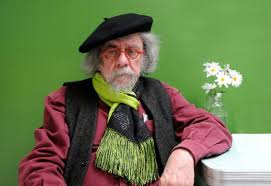
If you studied with Philippe Gaulier, you remember the moment he looked at you and said nothing.
Not a theatrical silence. Not a waiting-for-the-punchline silence. Just the empty, indifferent void of a man who had seen hundreds of students before you and would see hundreds after. And then, finally, the verdict: a single word, delivered flatly, without malice.
“Non.”
It was devastating. It was also, according to everyone who survived it, the greatest gift a performer could receive.
Philippe Gaulier, the French master clown whose teaching methods were equal parts brutality and benevolence, died February 9, 2026, from complications of a lung infection. He was 82. His passing marks the end of an era for physical theatre—but his voice, sharp and unforgiving, will echo in comedy studios for generations.
The Boy Who Was Laughed At
Gaulier was born in occupied Paris in 1943. He wanted to be a serious actor. He trained for it. He walked onto stages intending to move audiences to tears.
Instead, they laughed.
It was not the laugh of recognition. It was the laugh of look at him trying so hard. For a lesser artist, this would be humiliation. For Gaulier, it was data. He stopped fighting the current and let it carry him to Jacques Lecoq’s school, where the body was the instrument and the mask was the truth.
He emerged not just a performer, but a diagnostician of comedy. He could see, instantly, when a student was lying—lying with their shoulders, lying with their breath, lying with the desperate need to be liked. And he made it his life’s work to kill that lie.
The School of Broken Egos
In 1980, Gaulier opened his own school in Paris. It had no prestige, no campus, no endowment. What it had was a man behind a desk who would not let you pretend.
His teaching style was, by any conventional measure, abusive. He told Emma Thompson she was “too English.” He told Helena Bonham Carter her performance made him want to sleep. He told students their faces were wrong, their costumes were wrong, their very existence on the stage was an imposition.
And yet.
Sacha Baron Cohen, who studied under Gaulier in the 1990s, described him this week as the man who “believed in me.” Not in spite of the cruelty—because of it. Gaulier’s insults were not meant to wound; they were meant to strip away the protective armor of ego that prevents true play. When you have been told you are terrible, and you survive, and you try again—that second attempt is freedom.
“He armed me with techniques that still get me into trouble,” Baron Cohen said.
Geoffrey Rush called him a “liberator.” Rachel Weisz described his classroom as the only place she ever truly failed, and therefore the only place she ever truly learned.
The Plate-Smasher
As a performer, Gaulier was best known for Les Assiettes, a routine whose premise was deceptively simple: he smashed plates. But in his hands, destruction became choreography. Each shatter was a punchline. Each fragment was a question: Why do we laugh when things break?
He never fully explained it. He didn’t believe in explanation. He believed in doing, failing, and doing again.