

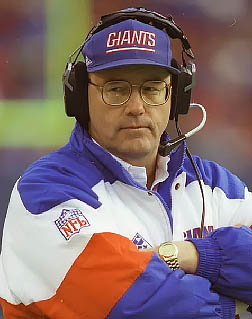
The football world said goodbye this week to a man whose name is etched in both the glory and the complexity of New York Giants history. Ray Handley, the assistant who helped steer the team to two Super Bowl peaks and the head coach who presided over a sudden, stark valley, passed away at 81.
His story is a compelling chapter in the NFL’s book of “what happens next?”—a tale of brilliance, unexpected promotion, and the immense weight of legacy.
From Stanford Star to Parcells’ Protégé
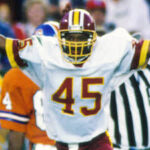
Handley’s football roots ran deep. A standout running back at Stanford, he was so good he earned a place in the university’s Athletics Hall of Fame. His intelligence on the field translated to the sidelines, where he built a solid coaching resume at Army, Stanford, and Air Force.
His career-defining break came in 1984 when Bill Parcells brought him to the Giants as offensive backfield coach. Handley wasn’t just along for the ride; he was a key architect in a golden era. His strategic mind helped shape an offense that complemented a legendary defense, culminating in victories in Super Bowl XXI and Super Bowl XXV. He was, by all accounts from that time, an indispensable part of the brain trust.
The Unexpected, Unenviable Promotion
When the larger-than-life Parcells stepped down after the second championship, the Giants made a surprising choice for his successor: the cerebral assistant, Ray Handley. In 1991, he was tasked with the near-impossible: following a legend and maintaining a dynasty.
The tenure was short and turbulent. Taking over a veteran team with immense expectations, Handley finished with a 14-18 record over two seasons (8-8 in 1991, 6-10 in 1992) before being dismissed. The bright offensive mind found himself navigating a storm of pressure, scrutiny, and a team in transition. As former owner John Mara later reflected to ESPN, Handley was “the brightest coach we had,” while acknowledging the profound difficulty of the situation.
A Quiet Exit and Lasting Respect
What followed was perhaps the most telling part of Handley’s story. At just 48, he walked away from the NFL and never returned, receding from the public eye. He declined interviews and refused to relitigate the past, a man who seemed content to let his record, for better or worse, speak for itself.
Yet, the respect from those who knew him never wavered. Bill Parcells, in a remembrance, didn’t just praise him as a coach, but highlighted his unique intellect, calling him “a very astute mathematician” who was crucial in critical game-management situations. “I had a lot of respect for him,” Parcells said—a powerful endorsement from one of the game’s toughest judges.
A Complicated Legacy
Ray Handley’s legacy is multifaceted. He is a two-time Super Bowl champion, a valued and brilliant assistant whose contributions are woven into the fabric of the Giants’ greatest years. He is also a cautionary tale about the brutal challenges of succession planning in sports.
But above all, he remains a football man through and through—a Stanford Hall-of-Famer who reached the mountaintop as an assistant, faced the fire as the boss, and ultimately chose a life of quiet retirement, on his own terms.
Our condolences go out to his family, friends, and all who played alongside and for him. Rest in peace, Coach.
What are your memories of the Giants’ teams from the Handley era? Share your thoughts in the comments below.